PKS Students Investigate AI’s Impact on Education
November 2026
Chris Livaccari, Head of School
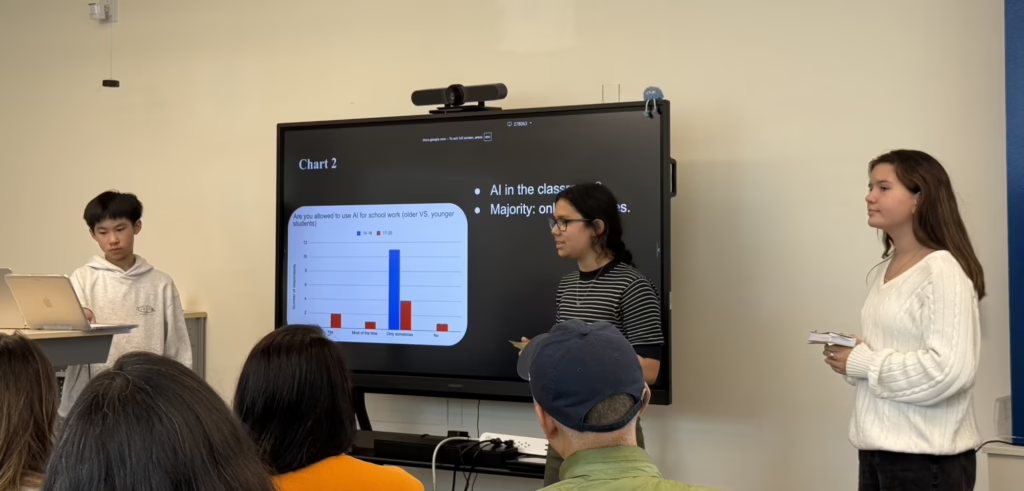
I recently wrote about the relevance of a PKS education in the age of AI and noted that our 8th graders were completing a project on AI in education, with a culminating presentation of their findings to members of our school’s AI Task Force.
This task force, comprised of faculty, staff, and members of the Board of Trustees, is a key resource for the school around the use of AI in education. The students’ findings were remarkably consistent with the approaches the AI Task Force has been recommending, and this coming spring, we’ll share more with the PKS community about the group’s work at a PKS Learns (Parent Education) session – stay tuned for more on that!
What Our Students Learned
Importantly, and in keeping with our Reggio focus on children’s agency and capacity, we give weight to student voice in our decision making. Our 8th graders were tasked with researching the role of AI in education and making recommendations to the school. The students surveyed and interviewed four key constituencies: students, teachers, parents, and alumni, and shared a number of key findings, including that:
- The majority of our alumni now in high school and university have had teachers that have encouraged the use of LLMs for school work.
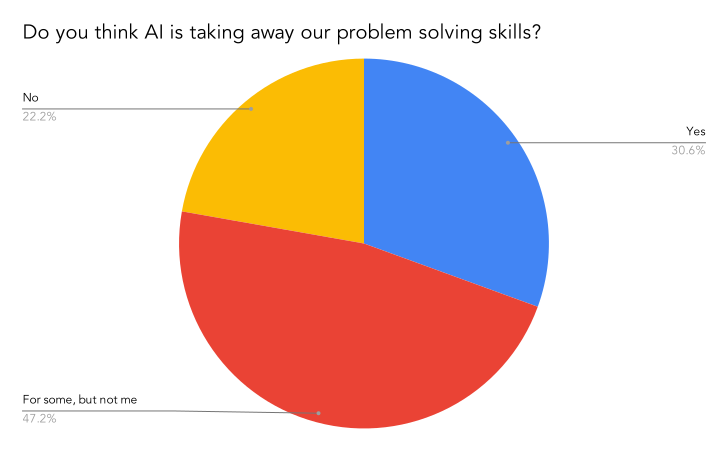
Student group survey findings.
- Parents of younger children expressed greater concern about AI’s negative impact than parents of older children.
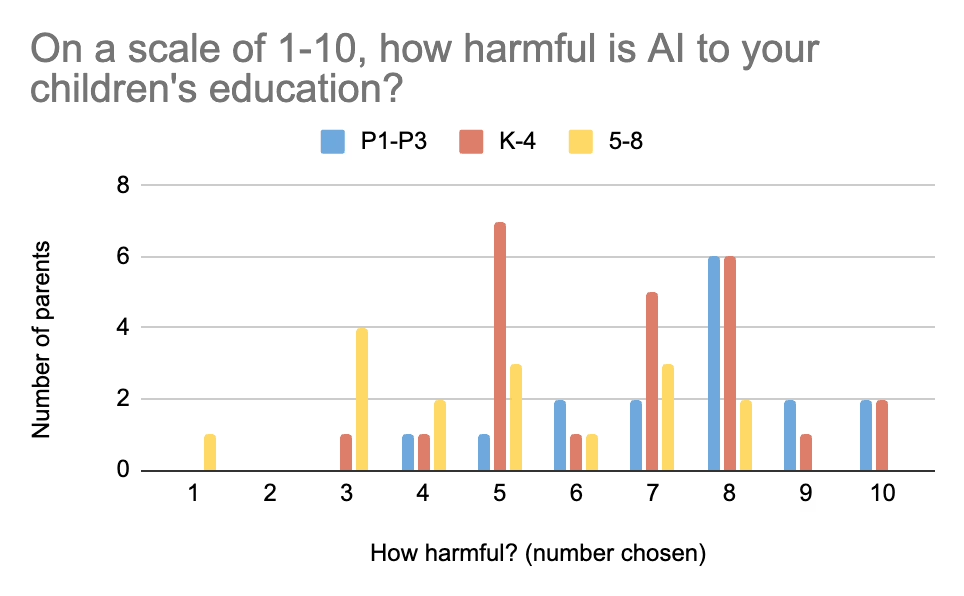
Parent group survey findings.
- A majority of our students who were surveyed believe that AI is an efficient tool, but one that could pose a significant threat to human creativity and problem-solving skills.
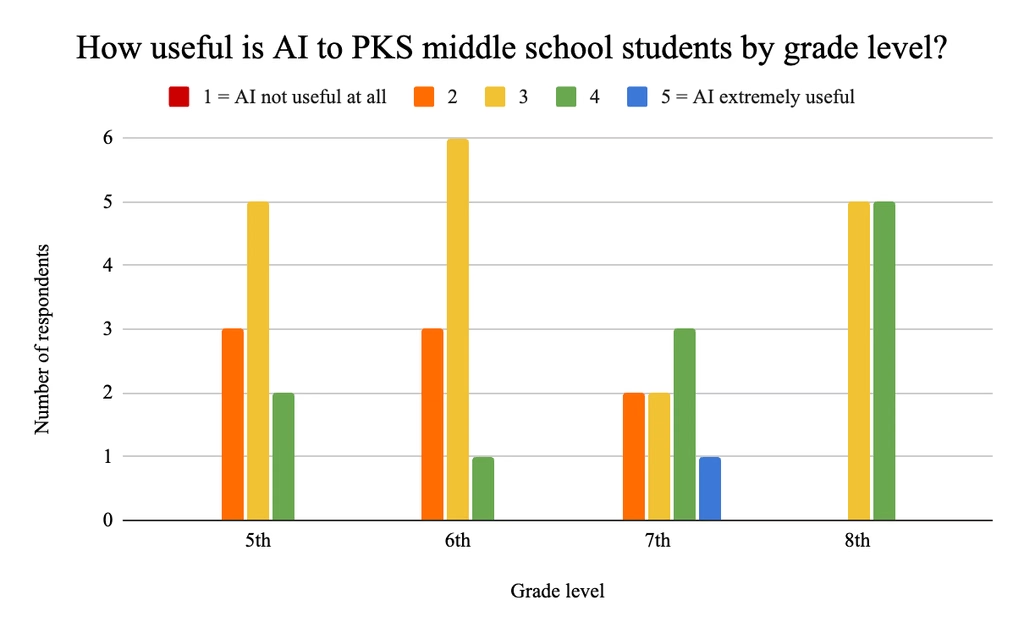
Middle school student group findings.
- A majority of PKS teachers surveyed expressed concern that the use of AI reduces students’ ability to think independently, with originality and creativity, and so they limit its use in their classrooms.
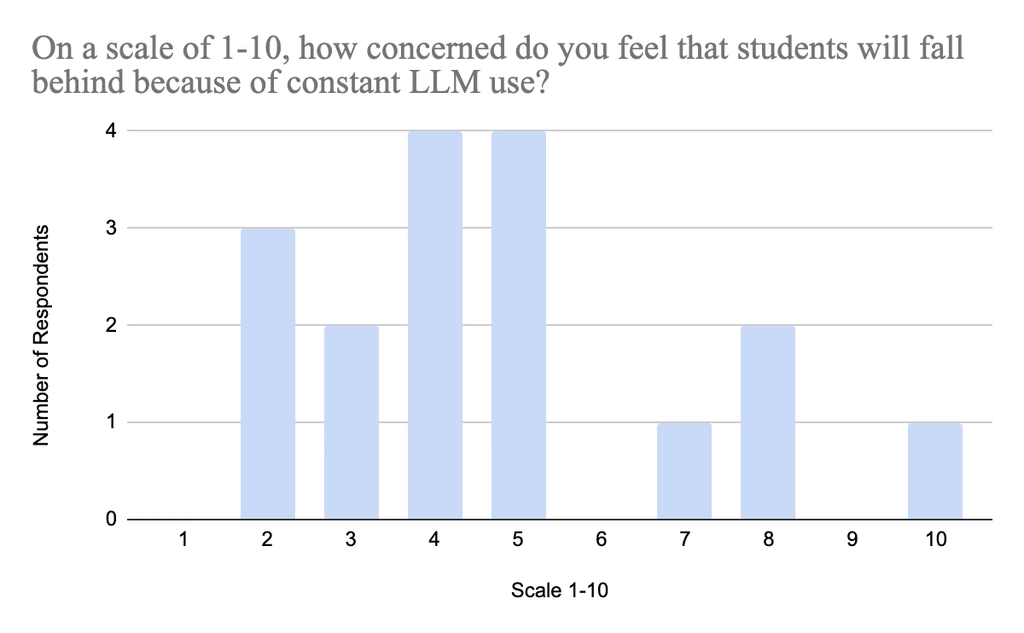
Teacher group findings.
From Research to Recommendations
From analysis of the data, the students derived a series of recommended approaches for the school, including that:
- The AI Task Force should explore and share with the faculty AI tools that can help teachers use AI more effectively for lesson planning (this is already happening!).
- Middle School teachers should set clear boundaries around AI use with their students (also already happening).
- AI use for younger middle school students (grades 5-6) should be limited, but teachers and the AI Task Force should identify trusted AI tools that can be considered for use by students in later middle school (grades 7-8).
- The school should be intentional and proactive in teaching students about the impacts AI has on student learning, both positive and negative.
“We recommend that PKS teachers focus on teaching students not just how and when to use AI, but also the foundations of AI and how it works.” – PKS Students
What’s encouraging here is how closely our students’ findings align with the AI Task Force’s recommendations and the overall approach that most of our peer independent elementary and middle schools are taking. Our approach will continue to evolve alongside the technology, but our general framework is to focus on building the mindsets and skill sets that will enable our students to be effective users of AI when they are ready. As the students recommended, we are generally limiting AI use across our classrooms while exploring how best to incorporate more learning about AI in the upper grades of Middle School, as our students approach high school.
How was the student research project structured?
Our Middle School Project teacher, Jingran Su, designed this project around a pressing question: How is AI shaping education?
“I think AI takes the hard parts of learning away, and I want the students to experience some struggle.” – PKS Middle School Teacher
Our Three Traditions in Action
At the end of the day, we go back to our three traditions of Reggio Emilia, progressive education, and the Chinese humanistic tradition, all of which stress the importance of cultivating children’s curiosity, creativity, independence of thought, and capacity for reflection and sound judgment. These traditions remind us that the purpose of education is not simply to acquire knowledge or master new tools, but to develop the intellectual, social, and ethical capacities to use that knowledge wisely and responsibly.
In an age when AI can increasingly provide answers, our responsibility as educators is to help students learn to ask better questions, think critically and creatively, engage with different perspectives, and make thoughtful choices about when and how to use technology.
What was especially gratifying about our 8th graders’ work was that they demonstrated precisely these capacities: they investigated a complex question, gathered and analyzed evidence, considered different perspectives, and developed thoughtful recommendations for their own school community. In doing so, they offered a powerful example of why the three traditions at the heart of a PKS education remain so relevant in the age of AI.